
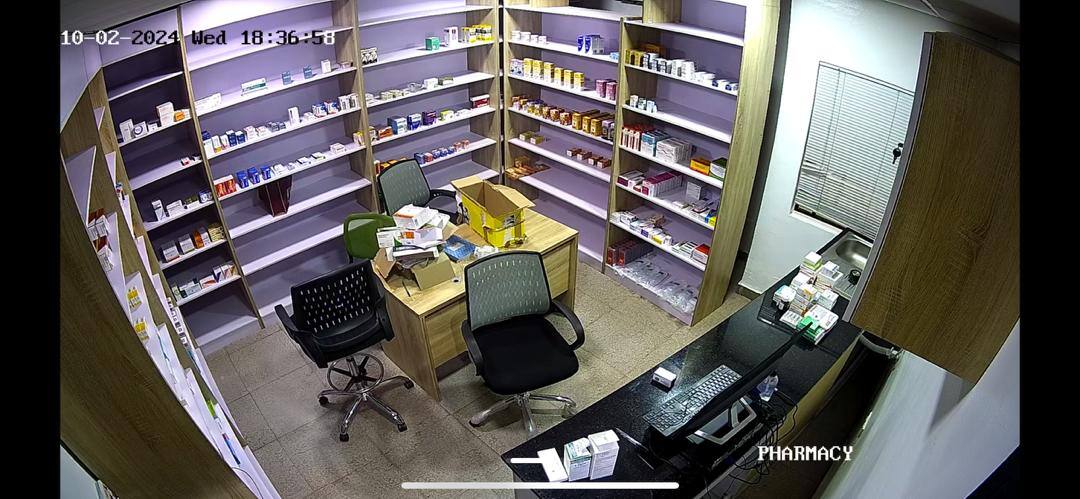
Most shop owners we visit in Lagos have the same worry: they want cameras that actually catch something useful when it matters, not a system that looks impressive on a spec sheet but leaves gaps at the till or the back door. After installing systems across pharmacies, boutiques and warehouses, a few things consistently separate a camera setup that works from one that disappoints.
It is tempting to think more cameras means more security. In practice, three well placed cameras covering the entrance, the till area and the stockroom door beat eight cameras crowded around one corner. Before buying anything, walk the shop and mark every point someone could enter, exit or reach a cash drawer unseen. That list decides how many cameras you need, not a fixed package.
Power cuts and dim shop fronts are common, and most incidents worth reviewing happen in low light. A camera with genuine infrared night vision, not just a marketing label, keeps footage usable after dark. Ask to see a recorded night sample before committing to a model, since infrared range varies a lot between otherwise similar looking cameras.
A sharp 4K image is not much help if the footage was overwritten before anyone thought to check it. Aim for at least two to three weeks of continuous recording. This usually means pairing your cameras with a DVR or NVR that has enough hard drive space, and setting motion triggered recording on lower traffic cameras to stretch that storage further.
Almost every modern system can send footage to a phone. The difference is whether it is simple enough that you will actually check it. During installation, ask for a walkthrough with your own phone, not just the installer's demo device, so you know exactly what opening the app looks like on a slow connection.
Cameras mounted outside a shop front face sun, rain and dust across a Lagos wet season. Look for an outdoor rating on the camera itself, and make sure cabling and connection boxes are also sealed, not just the camera housing. A camera can be rated for outdoor use and still fail early if the junction box behind it is not.
If you only remember one thing from this, let it be this order of priority: coverage of entry points first, reliable night vision second, adequate storage third, and simple remote viewing fourth. Everything else is a nice extra once those four are solid.